
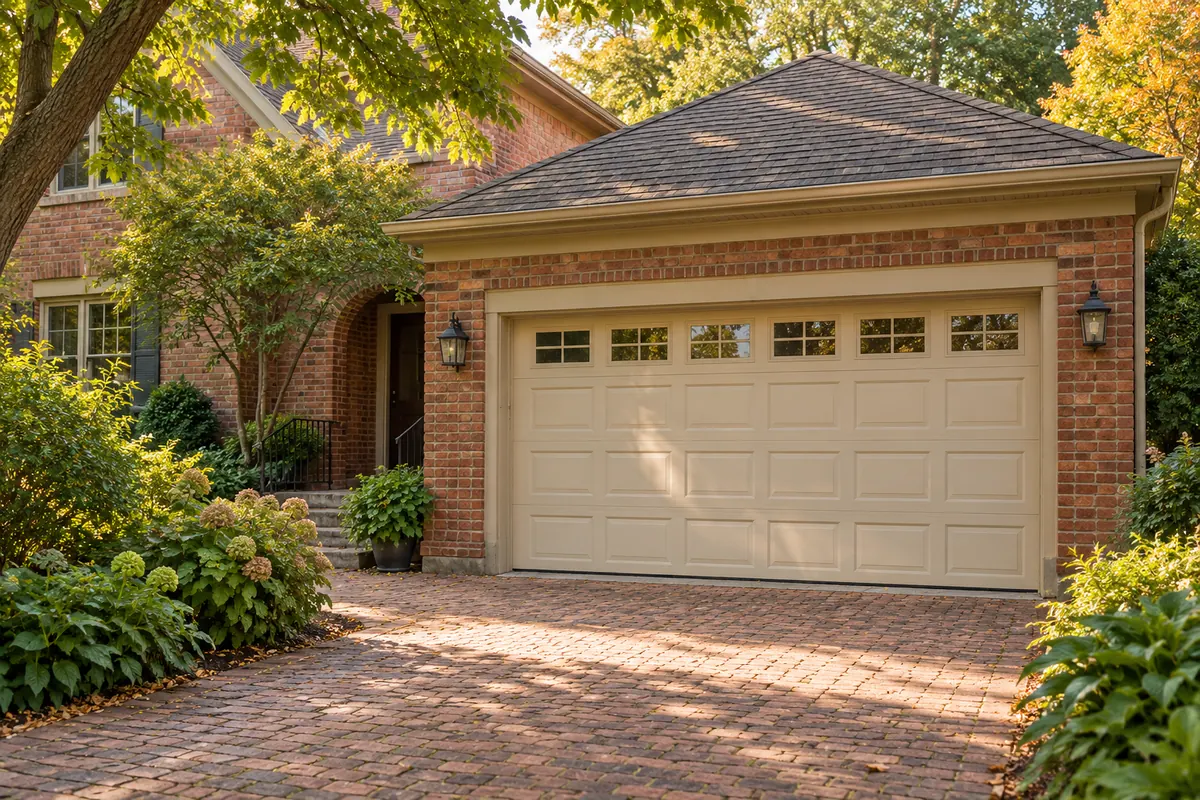
Start with the door’s present position
Is it fully closed, fully open or stopped between the two? Is it straight or visibly uneven? Give those details first. Keep everyone away from a partly open or unstable door, including pets and children. Do not stand beneath it, push it into place or try to hold it up. If a vehicle is inside, mention that on the call without attempting to move it under an unsafe opening.
Separate no response from unusual movement
A remote that gets no response is one symptom. A door that starts and stops is another. If you already know that a different control responded, mention it, but do not repeatedly cycle a door that is behaving abnormally. Note whether there was a sound and when it occurred. These observations can organize a repair discussion; they do not establish which component has failed.
Leave adjustments out of the investigation
Springs and cables can carry significant tension. Stay clear of them and do not loosen, disconnect or adjust parts to investigate a fault. A crooked door or something visibly displaced is a reason to stop using it and describe what you can see from a safe distance. You can note a visible equipment label if it is easy to read without approaching the mechanism. There is no need to reach overhead for it.
Make one clear call
A helpful opening is: “The door is closed, the remote gets no response, and the car is inside.” Add the address, whether the garage is shared or private and any earlier signs you noticed. Call 614-350-7696 to confirm suitable repair support, availability and how an assessment is estimated. If the issue is instead a key in a pedestrian door, say so; that belongs to a different lock-service conversation.